Madeira is mild all year: Funchal’s average daytime high runs from about 20 °C in winter to 27 °C in late summer, and the sea stays between roughly 18 and 24 °C. What changes through the year is the rain (mostly October to March), the cloud in the mountains, and the crowds. Treat every month as two climates: the south coast, and everything north of it or above about 1,000 metres.
In short
- Warmest sea: August to October. Driest trails: June to September. September is the best all-rounder.
- Wettest: October to December, then easing to March. Mostly heavy bursts with sunny days between.
- The mountains are roughly 10 °C colder than Funchal, and often in cloud, in every month.
- Busiest and dearest: August, Christmas and New Year, Carnival and Easter.
- Wind at the airport is most likely in winter and spring. Build a spare day into those trips.
What to pack for all of it is on our Weather and what to pack page.
Funchal’s weather in numbers
Averages for Funchal, on the south coast. The north is cooler and wetter, and the mountains are another climate entirely.
| Month | Day | Night | Rain | Rainy days | Sea | In a word |
|---|---|---|---|---|---|---|
| January | 20 °C | 14 °C | 67 mm | 6 | 19 °C | Green |
| February | 20 °C | 14 °C | 72 mm | 6 | 18 °C | Carnival |
| March | 21 °C | 14 °C | 62 mm | 6 | 18 °C | Waking up |
| April | 21 °C | 15 °C | 45 mm | 5 | 18 °C | Flowers |
| May | 22 °C | 16 °C | 27 mm | 3 | 19 °C | Easy |
| June | 24 °C | 18 °C | 8 mm | 1 | 21 °C | Cloud on the hills |
| July | 25 °C | 20 °C | Almost none | 0 | 22 °C | Summer |
| August | 27 °C | 21 °C | Almost none | 0 | 23 °C | Busy |
| September | 27 °C | 20 °C | 23 mm | 3 | 24 °C | The sweet spot |
| October | 25 °C | 19 °C | 91 mm | 7 | 23 °C | Golden |
| November | 23 °C | 17 °C | 80 mm | 7 | 22 °C | Showers |
| December | 21 °C | 16 °C | 95 mm | 9 | 20 °C | Lights |
Temperatures and rain are IPMA’s official 1991 to 2020 averages for the Funchal observatory, rounded; rainy days are days with at least 1 mm. That is about 575 mm of rain in a whole year, on around 53 days. Rain swings hugely from year to year: one storm can bring a month’s worth in a day, and some Decembers are almost dry.
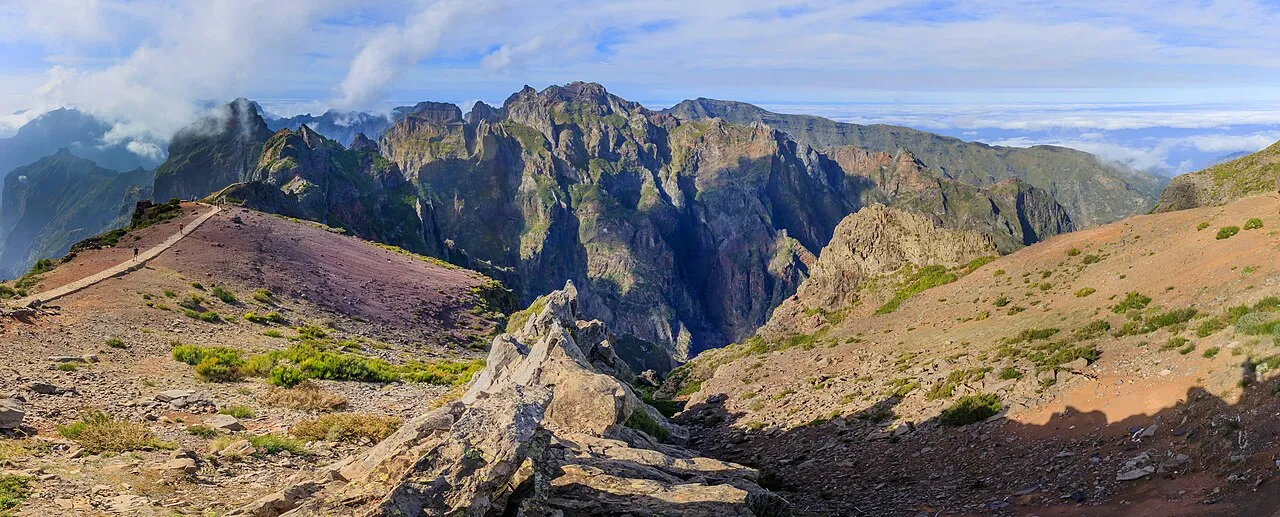
A useful rule: at Pico do Arieiro, 1,818 m up, take roughly 10 °C off the Funchal figure, then add wind.
Month by month
January
The quietest month once the New Year visitors fly home, with low prices and plenty of hire cars. Funchal gets plenty of bright days between the showers. The island is at its greenest and the waterfalls are full. The high peaks can have frost and ice, occasionally snow, and the high trails need warm layers, gloves and a proper jacket. Good for: south coast levadas, city time, a cheap escape from northern Europe.
February
Much like January, with Carnival on top. For about a week Funchal fills with parades and street parties, and hotels in the city fill with it. In 2027 Carnival Tuesday falls on 9 February. It is also one of the months when wind at the airport is most likely to delay or divert flights. See The airport and the wind.
March
The rain starts to ease, the days lengthen and the walking season begins properly. The sea is still at its coolest, around 18 °C. Easter week can fall in March or April and brings a jump in visitors and prices.
April
Spring flowers everywhere, from the gardens of Funchal to the roadsides of the north. Walking conditions are good, the landscape is green, and the crowds of summer have not arrived. The Flower Festival runs from late April through May, with flower carpets in the streets and a parade; in 2027 it is 29 April to 30 May, with the big parade on Sundays 2 and 16 May. Showers are still possible, especially in the north.
May
One of the easiest months of the year: warm, mostly dry, green, and not yet crowded. Late in the month the summer cloud starts to gather on the mountainsides, so the high walks become a question of timing. Go at dawn for the best chance of a clear ridge.
June
The cloud month. A flat lid of cloud settles over the middle of the island for days at a time. On some days you drive up through grey and come out above a white sea with the peaks standing in sunshine; on others you spend the whole walk inside it. Boat trips, the coast and low levadas are the safe bets. Saturday nights bring fireworks over Funchal bay during the Atlantic Festival (in 2027 on 5, 12, 19 and 26 June).
July
Summer arrives properly: dry, long days and the first wave of school holidays from mainland Europe. On hot days, a shaded forest levada on the north side such as Caldeirão Verde is the comfortable choice. Book trail licences for the popular routes well ahead, and expect the Pico do Arieiro car park to be full before sunrise.
August
The warmest air, the busiest month and the highest prices. Temperatures on the coast are pleasant rather than harsh. The exception is the leste: a few days a year of hot, dry wind off the Sahara that can push Funchal past 30 °C and turn the sky a dusty yellow. Walk early on those days, not at midday, and double your water. Dry summers also bring wildfire risk, and trails can close at short notice when it is high. The Wine Festival starts in the last third of the month (22 August in 2027).
September
Ask a Madeiran and September often wins. The sea is at its warmest, the trails are still dry, and the island breathes out once the school holidays end in the first half of the month. The grape harvest and the Wine Festival are under way (until 12 September in 2027). The first autumn rain may arrive late in the month, but it rarely lasts.
October
Still warm, with the sea barely cooler than September’s. Rain returns, and on the long-term average October is one of the wettest months in Funchal, but it tends to come as a few heavy days between settled spells. The trails are in good shape after summer and emptier than they have been for months. A very good month for walking and for anyone who likes the island calmer.
November
Wet, but rarely all day on the south coast: a morning downpour is often followed by a bright afternoon. The north and the mountains get much more. Heavy rain means rockfall, and the IFCN closes trails after storms. Check the status before every walk. Prices drop and the island is at its quietest outside January.
December
The wettest month on the long-term average, although many days are bright, and Funchal still reaches about 21 °C. From early December the city is strung with lights, on the night of 23 December the market becomes a street party, and the New Year fireworks over the bay fill every hotel. Book the last week of December months ahead. Like February, it is a month when flights can be disrupted by wind.
Reading the forecast on a mountain island
The island is a mountain range sticking out of the Atlantic. The damp north-east wind piles cloud against the north side, which is why the north is so much greener and wetter. The south, including Funchal, sits in the lee and stays drier and sunnier. And every few hundred metres you climb, the air gets cooler.
In practice:
- Look at the webcams, not the app. The webcams on netmadeira.com show you the cloud in real time, on the coasts and up in the mountains.
- Go early for the peaks. Mountain cloud usually builds through the day. Our Pico do Arieiro page has the details.
- If it is grey where you are, drive. Cloud in Funchal often means sun in Ponta do Sol or the far west, or the reverse.
The best month for what you want
| You want | Go in | Why |
|---|---|---|
| Walking the high trails | May, September, early October | Dry paths, cooler air, better odds of clear peaks |
| Walking in cooler weather | March, April, November | Green, quiet, but check trail status after rain |
| Swimming | August to October | The sea reaches 23 to 24 °C |
| Reliable sun | June to September | Driest months on the south coast |
| Fewest people, lowest prices | January, November, early December | Quietest, apart from the holiday weeks |
| Events | February, April or May, December | Carnival, Flower Festival, New Year fireworks |
Two things apply in every month. First, trail permits for the official routes are booked and paid online in advance, and in summer the busiest ones sell out. Second, whatever month you come, pack a light waterproof and a warm layer. Our page on beating the crowds has the timing tricks for the busy months.
The Tropi Guide app alerts you when a trail you have saved closes or reopens, so a storm or a fire day does not catch you at the trailhead.
Questions people ask
What is the best month to visit Madeira?
September is the best all-rounder: the warmest sea of the year, dry trails and fewer people once European school holidays end. May and October come close, though October is when the rain usually returns. For walking in cooler air, April is a good choice.
Is Madeira warm in winter?
On the south coast, yes by European standards: daytime highs around 20 °C in January and February in Funchal, and nights around 14 to 15 °C. The mountains can be near freezing, and there is more rain, mostly in short heavy spells.
When is the rainy season in Madeira?
October to March brings most of the rain, with October, November and December the wettest months in Funchal on the 1991 to 2020 averages. The north coast and the mountains get far more rain than the south at any time of year.
Can you swim in the sea in Madeira in winter?
Yes. The sea rarely drops below about 18 °C, which feels cool but is swimmable. Choose the sea pools and sheltered bays, because winter swells on the north and west coasts are dangerous.
Is August too hot in Madeira?
Rarely on the coast, where highs average about 27 °C. The exception is a few days a year of hot, dusty wind from the Sahara, when Funchal can pass 30 °C. August is the busiest and most expensive month, which is the bigger drawback.